As the Senior Sales Team Leader at Vuly Play and a former elite Australian trampoline gymnast, I have spent my entire life in the air. From the years I spent training for the Australian Olympic team to the thousands of hours I have spent helping families find the right backyard setup, I have learned one thing: a trampoline is only as fun as it is safe.
I often get asked by parents, "When can my child start doing tricks?" or "How do I know they are ready for more than just a basic bounce?"
The answer is not just a number on a birthday card. It is about a progression of skill, physical maturity, and having the right equipment. Here is my guide to navigating the stages of trampoline tricks safely.
1. The Starting Line: Ages 6 and Under
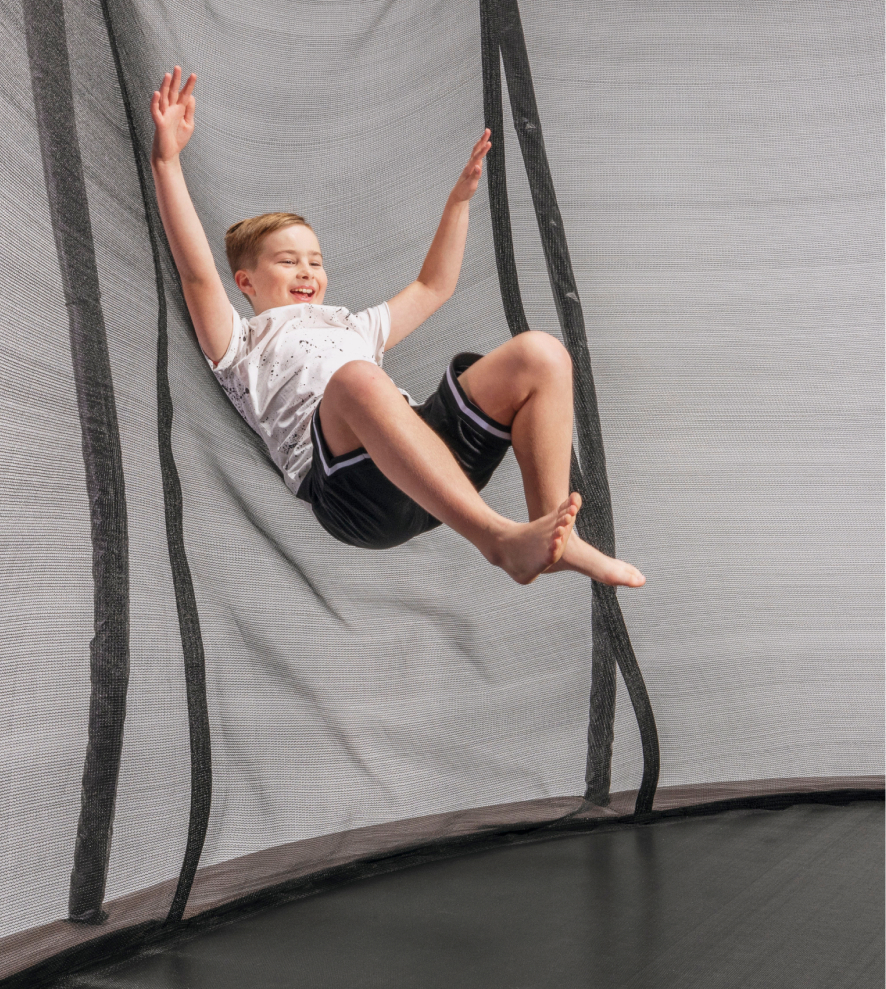
In the gymnastics world, we start young, but in the backyard, the rules are different. Most safety organisations and we here at Vuly recommend waiting until age 6 before using a full sized trampoline.
At this age, the bones of a child are still developing and their coordination is still loading. For these junior jumpers, it is not about tricks; it is about foundational movement.
- The Goal: Mastering the "Stop Bounce." This is the most important skill in trampolining. Can they bend their knees and kill the momentum instantly?
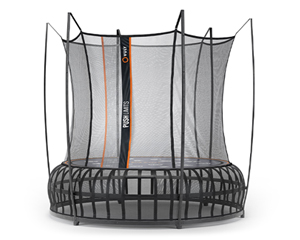
- Safety Tip: At this stage, ensure they are on a trampoline like the Vuly Ultra or Flare which feature our no gap netting. This prevents tiny hands and feet from ever touching the springs or the frame.
2. Beginner Progressions: Ages 6 to 9
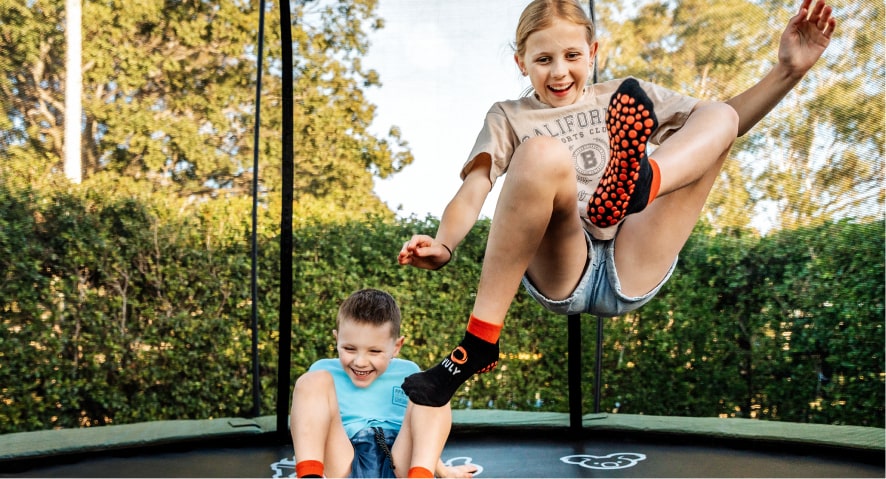
Once they hit school age, kids start feeling more confident. This is the "Learning the Ropes" phase. Before they even think about going upside down, they need to master the basics of spatial awareness.
- The Tricks:
- Seat Drop: Dropping to a seated position and bouncing back to feet.
- Knee Drop: Dropping to knees and returning to a standing position.
- Tuck Jumps: Bringing knees to the chest at the peak of the bounce.
Insight: These moves teach a child how to recognise their centre of gravity. If they cannot land a seat drop in the middle of the mat every single time, they are not ready for more.
3. Intermediate Skills: Ages 10 to 12
This is where the interest in flips usually starts. As a former gymnast, I cannot stress this enough: never attempt a somersault or flip without professional training. Instead, focus on skills that build the core strength required for those advanced moves later in life.

- The Tricks:
- Front Drop: Landing flat on the stomach with arms forming a diamond for the face and popping back up.
- Back Drop: Landing on the upper back or shoulders and bouncing back to feet.
- Swivel Hips: A seat drop, a half twist in the air, and landing in another seat drop facing the opposite way.
- Safety Tip: This is the age where kids get brave. Ensure the rule of one person at a time is strictly enforced. Most injuries occur when two people are on the mat and one double bounces the other.
4. Advanced Bouncing: Teens and Beyond
Teenagers often want more power. This is where the choice of trampoline becomes critical. For kids who are serious about their bounce, I always point them toward our Thunder or Thunder Pro models.
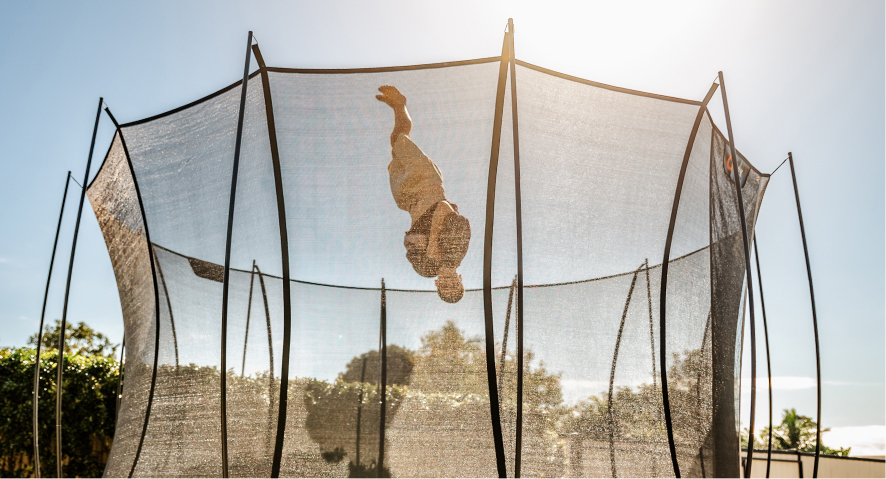
- The Tech Advantage: The leaf spring technology in the Thunder Pro provides a vertical and predictable bounce. Unlike traditional springs that can pull you toward the edges, leaf springs keep the jumper in the centre which is essential when practising complex routines.
- The Vuly Philosophy: We design our nets to be crash tested. Our hourglass shape and curved poles mean that even if a teen loses their balance during a trick, they will not hit a steel pole. They will be directed back toward the centre of the mat.
Professional Checklist for Trick Readiness
Before you let your kids progress to the next level of tricks, ask yourself these three questions:
- Do they have Mat Discipline? Do they always jump in the centre? Do they stop when they feel tired? Muscle fatigue is the leading cause of stuck landings and sprains.
- Is the equipment up to the task? Check your mat for UV wear and ensure your net is tensioned. A trick is only safe if the safety net is in top condition.
- Are they following the One at a Time Rule? As a pro, I never trained with someone else on my trampoline. Your backyard should be no different.

Final Thoughts
Trampolining is an incredible way to build fitness, confidence, and agility. My journey from a backyard bouncer to an Olympic level gymnast started with the same basics I have outlined here.
By respecting the progression and using a trampoline designed with world class safety features, you are not just giving your kids a toy. You are giving them a safe place to soar.
Ready to find the right mat for your future gymnast?
Explore our range of Vuly Trampolines and see why we lead the world in safety and design.