
Key Highlights
-
Progressive Growth: Learn how monkey bars transition from assisted hangs (Ages 3–5) to ninja challenges (Ages 9–12) and teen calisthenics (Ages 13+).
-
Physical Benefits: Beyond fun, monkey bars are a scientifically backed "antidote" to sedentary lifestyles, building upper-body strength, grip resilience, and core stability.
-
Safety First: Expert advice on managing blisters (a normal sign of progress!), choosing shock-absorbing soft fall surfaces, and setting age-appropriate heights.
-
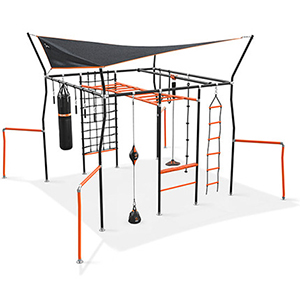
Future-Proof Play: Discover how Vuly’s modular Quest 2.1 system grows with your family through height-adjustable frames and "add-on" obstacle accessories.
Monkey bars are one of the rare backyard investments that don’t have an expiration date. Unlike a plastic slide that a ten-year-old outgrows, a modular monkey bar set evolves. It transitions from a toddler’s sensory gym to a teenager’s calisthenics station.At Vuly, we’ve watched thousands of kids progress through these stages. This guide is designed to help you navigate those milestones, ensuring your backyard remains a hub for strength, resilience, and most importantly safe adventure.
Why Monkey Bars are a Developmental Powerhouse
Before we dive into the ages, it’s worth noting why we advocate for this type of play. Statistics from physical development studies show that upper-body strength in children has seen a decline over the last two decades due to increased screen time. Monkey bars are the "antidote."
- Functional Strength: Unlike lifting weights, monkey bars use a child's own body weight to build lean muscle in the lats, deltoids, and core.
- Proprioception: This is the "body's GPS." Navigating bars helps kids understand where their limbs are in space, which is critical for sports and injury prevention.
- The "Grit" Factor: There is no "undo" button on a monkey bar. You either hold on or you drop. This teaches children how to manage minor risks and celebrate hard-earned wins.
Stage 1: The Explorers (Ages 3–5)
Focus: Sensory Input & Grip Confidence
At this age, it’s not about the "swing"; it’s about the "hang." Children are still developing the neural pathways between their brains and their grip.
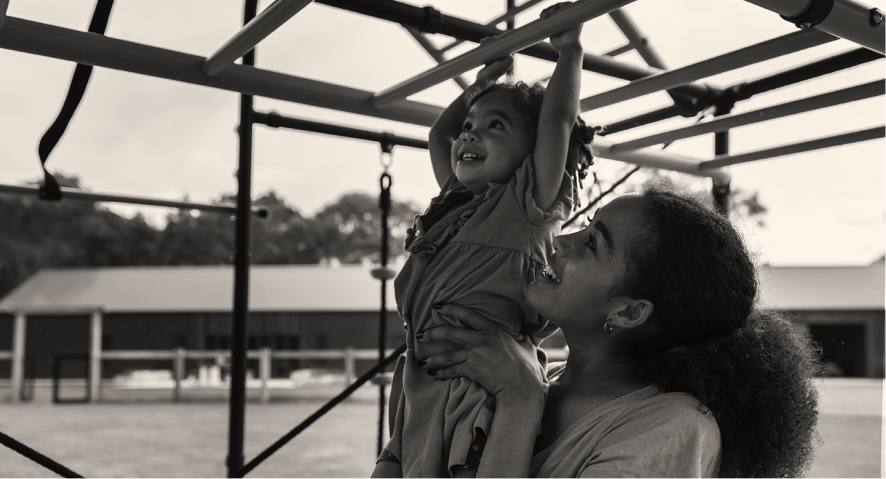
- The Milestone: The "Assisted Hang." This is where you support their weight while they simply feel the texture of the bar.
- Parent Tip: Lower your Vuly Quest frame to its lowest setting. You want their feet to be just inches off the ground so the "drop" feels like a hop.
- Challenges:
- The "Sloth" Hang: See if they can hold on for 5 seconds while you count out loud.
- The "Bar Tap": While you hold their waist, encourage them to reach out and "high-five" the next bar.
Stage 2: The Pathfinders (Ages 6–8)
Focus: Momentum and Rhythm
This is the "Golden Window." Coordination usually catches up with strength here, and you’ll see the "lightbulb moment" where they realize they can use their legs to create a swing.
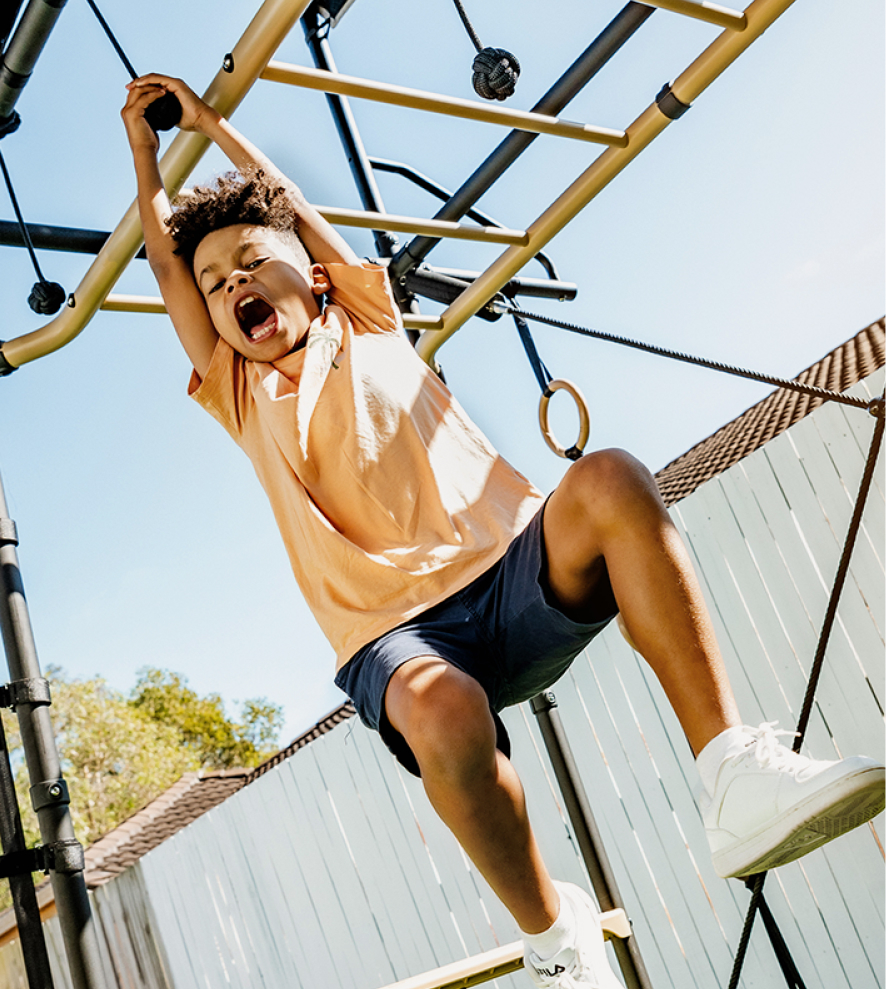
The Milestone: The "Full Traverse." Crossing the whole frame without help.
Expert Advice: This is when blisters usually appear. According to youth sports coaching data, skin takes about 2-3 weeks to toughen into protective callouses. Don't discourage play, but do introduce "rest days."
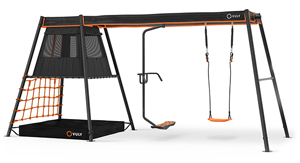
Vuly Parent Tip: Introduce the Vuly Swings or Trapeze attachments. These build the core strength needed to keep their legs tucked while they swing across the bars.
Stage 3: The Ninjas (Ages 9–12)
Focus: Complexity and Speed
Pre-teens don’t just want to get across; they want to do it fast or differently. This is where the modularity of the Vuly system becomes essential.
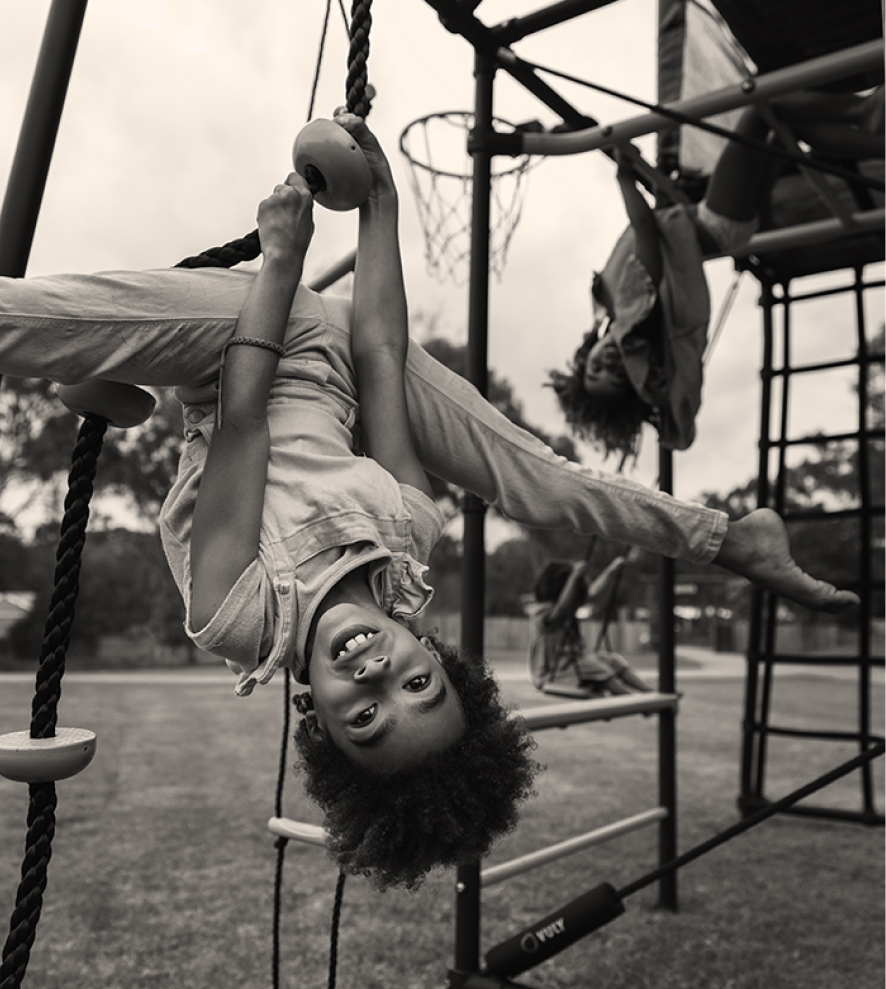
The Milestone: Skill Stacking. They might go across the bars, hit a Ninja Grip, and then drop onto a Cargo Net.
Physical Note: Boys and girls in this age bracket often undergo growth spurts. Ensure you raise the height of the bars to prevent "knee-knocking," which can lead to cautious, stunted movement.
Challenges:
- The "Missing Link": Challenge them to skip every second bar.
- Timed Trials: Use a stopwatch to build "explosive" power.
Stage 4: The Athletes (Ages 13–16)
Focus: Calisthenics and Conditioning
For teens, the monkey bars transform into a "Bodyweight Gym." With the rise of "Ninja Warrior" style competitions and calisthenics, teens use these frames for genuine fitness.
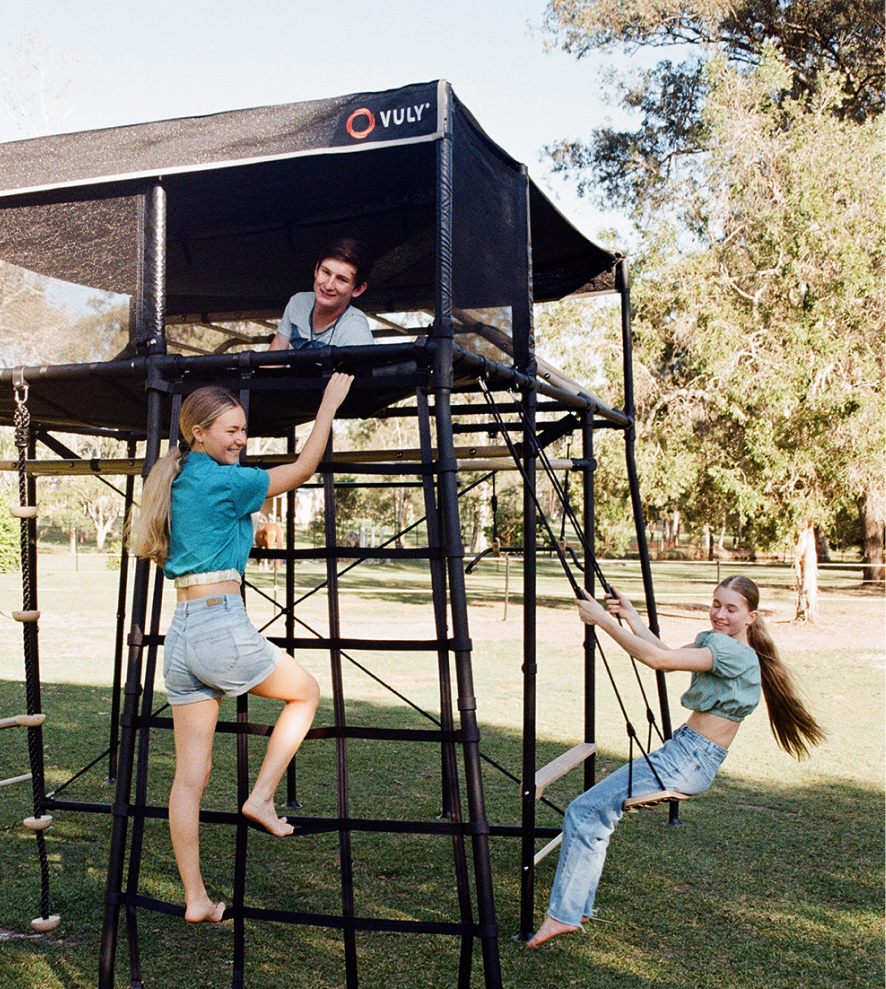
- The Milestone: Controlled Strength. Think pull-ups, chin-ups, and "L-sits."
- Safety First: At this age, the weight load increases. Vuly’s double-galvanized steel frames are built for this, but always ensure the frame is level and the anchors are secure.
- The Calisthenics Circuit:5 Pull-ups on the end bar.Full traverse (no skipping).10-second "Dead Hang" at the end to build forearm endurance.
Engineering Your Backyard: The Setup
A successful monkey bar setup isn't just about the bars; it's about the environment.
1. The Surface (Soft Fall)
Don't compromise here. While thick grass is "okay," it compacts over time. For high-use areas, we recommend:Bark/Mulch: 200mm-300mm depth.Rubber Mats: Excellent for "landing zones" at either end of the bars.
2. The Clearance Zone
Ensure there is a 2-meter "free zone" around the equipment. Fences, garden edges, and low-hanging tree branches are the most common causes of backyard play injuries.
3. Progressive AttachmentsThe beauty of the Vuly system is that you don't have to buy everything at once.
- Year 1: Base Monkey Bar frame.
- Year 2: Add a Swing or a Nest.
- Year 3: Upgrade to Ninja Grips or a Jungle Rope.
FAQs
At what age can children start climbing on monkey bars?
Children can usually start around 3 years old. If they can hold a heavy bucket of toys, they have the "grip reflex" needed to start assisted hangs.
Are blisters a sign of a problem with monkey bars?
Blisters on hands from climbing on monkey bars are a sign of progress! However, if a blister "rips," keep it clean and use a zinc-based cream. It’s the skin’s way of saying, "I’m getting stronger."
How do I keep my child interested in playing on monkey bars?
To keep your child or children interested in playing on monkey bars we recommend changing the configuration. Simply by moving a single ladder or adding a new grip accessory every six months will keep the "novelty" alive and the brain engaged.