
Backyard play can get pretty elaborate these days.
You’ve got seesaw swing, cargo net, basketball set, boxing bags, and enough add-ons to make the backyard feel like a neighbourhood playground.
Then there’s the seat swing.
One seat. Two ropes.
That’s pretty much it.
And somehow, kids still love it.
If you’re setting up an outdoor play space or thinking about adding a kids swing to what you already have, the traditional swing seat is still one of the simplest places to start.
No complicated game. No giant setup.
Just sit, hold on and swing.
What Is a Seat Swing?
A seat swing is the traditional single-seat swing most parents probably remember using at the park.
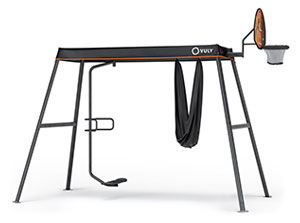
It hangs from two attachment points on a compatible swing set or play structure and moves forwards and backwards as your child swings.
Younger kids might start with a parent giving them a push.
Then comes:-
“Higher!”
Then:
“Again!”
Then eventually:
“I can do it myself.”
That progression is part of what makes a classic swing seat so easy to keep around as kids grow.
Why Do Kids Still Like a Classic Swing?
Not every outdoor toy needs ten different features.
Sometimes kids just want something familiar.
A traditional backyard swing gives them an activity they probably already know from school playgrounds, parks or their local neighbourhood.
They can swing slowly.
Go a little higher.
Figure out how to keep themselves moving.
Stop for a snack.
Then head back outside and do it all again.
A seat swing can support:-
-
active outdoor play
-
balance and coordination
-
body control
-
confidence
-
independent play
-
screen-free time outside
The nice part is that kids usually aren’t thinking about any of that.
They’re just having fun. Sometimes simple really does win.
Who Is a Seat Swing Best For?
One of the easiest ways to decide is to watch what your child already chooses at the park.
If they make a beeline for the swings every time, that’s a pretty good sign.
A traditional seat swing may suit kids who enjoy:-
-
regular playground swings
-
active movement
-
repetitive play
-
controlling their own speed
-
playing independently
-
simple outdoor activities
It can also work well if you’re trying to keep the backyard setup a bit more intentional.
You don’t need every accessory available.
Sometimes one thing your kid actually uses is better than five things sitting untouched.
Call it backyard JOMO.
Who Might Prefer a Different Swing?
A regular seat swing isn’t the best fit for every child.
Younger kids who need additional support may be better suited to a toddler swing designed for their age and stage.
There’s no universal “best swing”.
The more useful question is:-
What does your kid genuinely enjoy doing outside?
That usually gives you a better answer than choosing whatever looks coolest online.
Can Kids Learn to Swing on Their Own?
Many children gradually learn to create the swinging motion without someone constantly pushing them.
It usually happens naturally with practice.
They start learning how their legs, body position and timing affect the movement.
Then one day it clicks.
And suddenly you’re hearing:-
“Watch me!”
instead of:-
“Push me!”
There isn’t one set age when this happens.
Confidence, development and previous experience are different for every child.
That’s part of the appeal of a traditional kids swing seat.
It can start as parent-assisted play and gradually become something they enjoy independently.
Is a Seat Swing Good for Active Kids?
It can be a really easy way to add more movement to the backyard.
Swinging involves the legs, core and upper body as children learn to create and maintain momentum.
But kids generally aren’t thinking:-
“Time for exercise.”
They’re thinking:
“How high can I go?”
That’s the sweet spot.
Outdoor movement that doesn’t feel like something they’ve been told to do.
What About Independent Play?
Once children are old enough and confident enough to use the swing appropriately, it can become an easy activity they return to on their own.
There’s no big setup.
No game to organize.
No sibling required.
They can simply head outside for a swing.
That works well for:-
-
after-school play
-
weekends
-
summer break
-
long weekends
-
quick outdoor breaks
-
those classic “I’m bored” afternoons
And sometimes a quiet backyard swing is a pretty good reset after a long day.
For parents too, honestly.
Is a Seat Swing a Good Backyard Addition?
If your child already loves traditional swings, there’s a good chance a seat swing at home will make sense.
It may be a good fit when:-
-
your child regularly uses playground swings
-
you want a simple outdoor activity
-
your current frame is compatible
-
you have enough clearance
-
the swing suits your child’s age
-
your child enjoys independent movement
It may be less suitable when:-
-
your child needs more seating support
-
they prefer group play
-
they rarely use swings
-
your frame isn’t compatible
-
another accessory better matches their play style
You don’t need to turn your backyard into Canada’s Wonderland.
Sometimes one swing is enough.
The 30-Second Parent Checklist
Before buying, ask:-
- Does my kid already enjoy swings?
- Is this one suitable for their age and size?
- Will it fit our current setup?
- Do we have enough safe space around it?
- Will they genuinely use it?
If most of those answers are yes, you’re probably looking at a pretty sensible backyard addition.
Plan to get your first swing sets, use [V U L Y D I G E S T] to get $15 CAD off.
No need to build the entire backyard in one weekend.
A good play space can grow with your family.
An Author’s Childhood Memories
Think about the swings you remember from childhood.
No app. No LEDs. No charging cable.
Definitely no Wi-Fi. Just a seat hanging from a frame.
And somehow it was enough to keep you outside until someone called you in.
That’s why the classic seat swing still makes sense.
It gives kids movement.
A little independence.
Some fresh air.
And another reason to head outside while the weather’s good.