
Some kids see something that moves and immediately want to know:-
“Can I bounce on that?”
That is pretty much where the Bounce Swing begins.
Step onto the platform.
Hold on.
Start with a gentle bounce.
Feel it respond.
Then, naturally:-
“Again.”
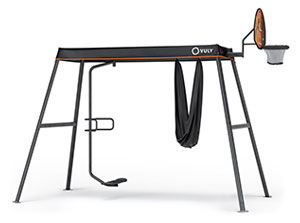
A Bounce Swing uses a standing platform and flexible bungee-style movement to create an up-and-down bounce that children control with their own body.
Simple idea but plenty of movement.
And for kids who already love jumping, bouncing and staying active, it can feel like a very natural addition to backyard play.
What Is a Bounce Swing?
A Bounce Swing is a backyard play accessory designed for standing and bouncing.
The rider stands on the platform, holds onto the supports and uses their legs and body movement to create the bounce.
That can encourage:-
-
balance
-
coordination
-
leg movement
-
body control
-
active outdoor play
-
confidence with moving equipment
The movement is easy to understand.
You move. The swing responds.
You adjust. Then you have another go.
Why Do Kids Enjoy the Bounce?
Because the response is immediate.
Push down.
The bungee responds.
The platform comes back up.
Kids can feel how their movement changes what happens next.
That creates a simple cycle:-
move → feel → adjust → bounce again
There are no complicated rules.
The movement itself becomes the activity.
For many kids, that is enough to keep them interested.
Can a Bounce Swing Support Balance?
It can give children a simple way to practise balance through play.
Because the platform moves beneath them, they need to keep adjusting their body position.
That can involve:-
-
shifting body weight
-
staying upright
-
stabilizing through the legs
-
reacting to movement
-
finding a comfortable rhythm
It is not formal training.
It is simply active play that naturally involves useful movement skills.
Who Might Enjoy a Bounce Swing?
One of the easiest ways to tell is to look at what your child already enjoys.
Do they:-
-
love jumping?
-
enjoy trampolines?
-
bounce whenever they get the chance?
-
prefer active outdoor play?
-
enjoy standing movement?
-
like equipment they can control with their body?
If yes, a Bounce Swing may feel like a good fit.
You are not trying to convince them to enjoy something completely new.
You are giving that energy somewhere else to go.
Is It Good for Small Backyard Play?
Yes.
A Bounce Swing does not need a big setup or a long game.
Kids can:-
step on,
bounce for a few minutes,
head over to another activity,
then come back later.
What Makes a Bounce Swing Useful?
The biggest strength is that the child controls the movement.
A small movement creates a small response.
More movement changes the bounce.
That gives kids something they can feel and adjust themselves.
Over time, they may start experimenting with:-
-
finding a steady rhythm
-
staying balanced longer
-
controlling the bounce
-
starting and stopping smoothly
-
creating their own movement games
The equipment gives them enough structure to understand what to do without telling them exactly how to play.
Will Kids Keep Coming Back to It?
No backyard accessory can guarantee long-term interest.
Kids change.
Their favourite activity this week might be completely different next week.
What helps is that the Bounce Swing is easy to return to.
They can hop on for a few minutes, bounce, move on and come back later.
No complicated setup.
No need for another child.
No big game required.
That makes it a flexible option for everyday outdoor play.
The 30-Second Parent Checklist
Before adding one, ask:-
- Does my child already love bouncing?
- Are they comfortable standing on moving equipment?
- Will it fit our current setup?
- Do we have enough clearance?
- Can I actually see them coming back to it?
Mostly yes?
That is a pretty good sign.
Did You Know?
A Bounce Swing combines bouncing and swinging into one big dose of backyard fun?
Kids are balancing, gripping, bouncing and swinging all at once without even thinking about the coordination behind it.
Mum: “Aren’t you getting tired?”
Kid: “Nope! I can do this all day!”
Mum: “Alright then. I’ll just go inside and pretend I didn’t hear that.”